
Have you learned the Portuguese verb limpar and started using it for almost every household chore?
Limpar a casa, limpar o chão, limpar a loiça…
People may understand what you mean, but limpar is not always the most natural verb to use. In Portugal, we have more specific verbs and expressions for different tasks around the house.
Learning these words will help you speak more accurately and sound more natural in everyday conversations. Let’s look at some useful vocabulary for talking about household chores in European Portuguese.
Watch the Video: Household Chores in European Portuguese
Would you prefer to learn by watching and listening? Watch the video below to hear the vocabulary and example sentences in European Portuguese.
How do you say “household chores” in Portuguese?
The usual translation of “household chores” is:
as tarefas domésticas
For example:
Tenho muitas tarefas domésticas para fazer.
I have a lot of household chores to do.
You may also hear people say as tarefas de casa, which refers more generally to the different jobs that need to be done around the house.
Cleaning and Tidying Vocabulary in Portuguese
Let’s start with cleaning, because whether we like it or not, it is part of everyday life 🙂
limpar: to clean
When you are talking about cleaning in general, you can use limpar.
Vou limpar a casa.
I’m going to clean the house.
This is a very common and useful verb. However, when you want to describe a specific task, there may be a more suitable option.
varrer: to sweep
If you are using a broom, the verb you need is varrer.
Vou varrer o chão.
I’m going to sweep the floor.
A broom is called uma vassoura.
esfregar: to scrub
When something needs a deeper clean, you can use esfregar.
Tenho de esfregar o chão da cozinha.
I have to scrub the kitchen floor.
You can also use this verb when talking about scrubbing a pan, a bath or another surface that needs some extra effort.
aspirar: to vacuum
To talk about using a vacuum cleaner, use the verb aspirar.
Vou aspirar a sala.
I’m going to vacuum the living room.
A vacuum cleaner is called um aspirador in Portuguese.
passar a esfregona: to mop
In Portugal, we usually say passar a esfregona when talking about mopping the floor.
Vou passar a esfregona no chão.
I’m going to mop the floor.
The word esfregona means “mop.” This is a useful word to learn if you live in Portugal, as you will hear it quite often.
tirar o pó: to dust
To talk about removing dust from furniture and other surfaces, we commonly use tirar o pó.
Tenho de tirar o pó dos móveis.
I have to dust the furniture.
You may also hear limpar o pó, but tirar o pó is very common in everyday speech.
limpar os vidros: to clean the windows
Sometimes limpar really is the right verb.
Hoje vou limpar os vidros das janelas.
Today I’m going to clean the windows.
In Portugal, we often say limpar os vidros when talking about cleaning windows.
arrumar: to tidy or put away
Cleaning and tidying are not quite the same thing.
When you organise a room or put things back in their proper places, you can use arrumar.
Vou arrumar a casa hoje.
I’m going to tidy the house today.
You can also use arranjar when you arrange or straighten something.
Vou arranjar as almofadas antes de receber visitas.
I’m going to arrange the cushions before having guests over.
You may also want to learn the Portuguese names for the different rooms and areas of a home. You can find many of them in this guide to real estate vocabulary in Portuguese.

Kitchen Chores in European Portuguese
There is also plenty of useful Portuguese vocabulary to learn in the kitchen.
lavar a loiça: to wash the dishes
One of the most common kitchen chores is lavar a loiça.
Tenho de lavar a loiça depois do jantar.
I have to wash the dishes after dinner.
In Portugal, you may see this word written as loiça or louça. Both spellings are accepted.
We use lavar, rather than limpar, because we are washing the dishes with water.
pôr a mesa: to set the table
Before eating, someone needs to pôr a mesa.
Podes pôr a mesa, por favor?
Can you set the table, please?
After the meal, you may need to levantar a mesa, which means “to clear the table.”
cozinhar: to cook
The Portuguese verb for “to cook” is cozinhar.
Gosto de cozinhar ao fim de semana.
I like cooking at the weekend.
Once you have finished cooking and eating, you may need to put the remaining food away.
Vou guardar a comida no frigorífico.
I’m going to put the food in the fridge.
levar o lixo: to take out the rubbish
If you live in a flat, you might say:
Tenho de levar o lixo lá a baixo.
I have to take the rubbish downstairs.
You can also simply say levar o lixo, meaning “to take out the rubbish.”
reciclar / separar o lixo
When talking about recycling, you can use reciclar or fazer a reciclagem.
Lá em casa, reciclamos sempre.
At home, we always recycle.
You can also say separar o lixo, especially when you are talking about sorting different materials.
Lá em casa, separamos sempre o lixo.
At home, we always sort the rubbish.
If you would also like to practise useful vocabulary for eating out, have a look at my guide on how to order food in Portuguese.
How to Talk About Doing the Laundry in Portuguese
The expression tratar da roupa can be used to talk about the whole process of washing, drying, ironing and putting clothes away.
Depending on the context, it can be translated as “to do the laundry” or “to take care of the laundry.”
Here are the expressions you can use for each individual task.
lavar a roupa: to do the laundry
Hoje tenho de lavar a roupa.
Today I have to do the laundry.
For delicate clothes, you may prefer to wash them by hand.
Prefiro lavar esta camisola à mão.
I prefer to wash this jumper by hand.
estender a roupa: to hang out the washing
Once the clothes have been washed, you can estender a roupa.
Vou estender a roupa na varanda.
I’m going to hang the washing out on the balcony.
This expression can be used whether you hang the clothes outside or on a drying rack indoors.
secar a roupa: to dry the clothes
If you use a tumble dryer, you can say:
Vou secar a roupa na máquina de secar.
I’m going to dry the clothes in the tumble dryer.
In European Portuguese, a tumble dryer is called uma máquina de secar.
dobrar a roupa: to fold the clothes
When the clothes are dry, you may need to fold them.
Vou dobrar a roupa agora.
I’m going to fold the clothes now.
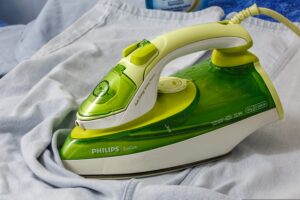
passar a ferro: to iron
Here is a household chore that many people are not particularly fond of: passar a ferro.
Tenho de passar a ferro mais tarde.
I have to do the ironing later.
Or, if you want to be honest:
Não gosto nada de passar a ferro!
I really don’t like ironing!
After that, you can pendurar a roupa no armário, meaning “to hang the clothes in the wardrobe,” or arrumar a roupa nas gavetas, meaning “to put the clothes away in the drawers.”

Making the Bed and Changing the Sheets in Portuguese
The Portuguese expression for “to make the bed” is fazer a cama.
Já fiz a cama hoje.
I’ve already made the bed today.
From time to time, you will also need to change the sheets.
Hoje vou mudar os lençóis da cama.
Today I’m going to change the bed sheets.
You can also say trocar os lençóis. Both expressions are commonly used.
Once the clean sheets are on the bed, you will need to voltar a fazer a cama, which means “to make the bed again.”
Practise using more specific verbs
You do not need to stop using limpar. It is a perfectly correct and useful verb. The goal is simply to learn which verb sounds most natural for each task.
Here are some of the most useful expressions from this article:
- limpar a casa: to clean the house
- varrer o chão: to sweep the floor
- esfregar o chão: to scrub the floor
- aspirar a sala: to vacuum the living room
- passar a esfregona: to mop
- tirar o pó: to dust
- arrumar a casa: to tidy the house
- lavar a loiça: to wash the dishes
- pôr a mesa: to set the table
- levar o lixo: to take out the rubbish
- estender a roupa: to hang out the washing
- dobrar a roupa: to fold the clothes
- passar a ferro: to iron
- fazer a cama: to make the bed
- mudar os lençóis: to change the sheets
If you would like to understand Portuguese verbs more deeply, you can continue with this introduction to Portuguese verbs and conjugations.
Exercise: Describe Your Household Chores in Portuguese
Choose three or four expressions that are relevant to your own routine and use them to describe what you need to do around the house today. Write your sentences in the comments so you can practise using the new vocabulary.
Download the free vocabulary PDF
If you would like to keep all these expressions with you so that you can review them and start using them in your daily life, I have prepared a free PDF with all the vocabulary from this lesson.
It includes the English translations and example sentences, so you can save it, print it or return to it whenever you need it.
Download the free PDF here: https://start.learn-portuguese.org/household-chores-yt
That’s all for today! I hope you find both this article and the PDF helpful 🙂
Beijinhos,
Mia